
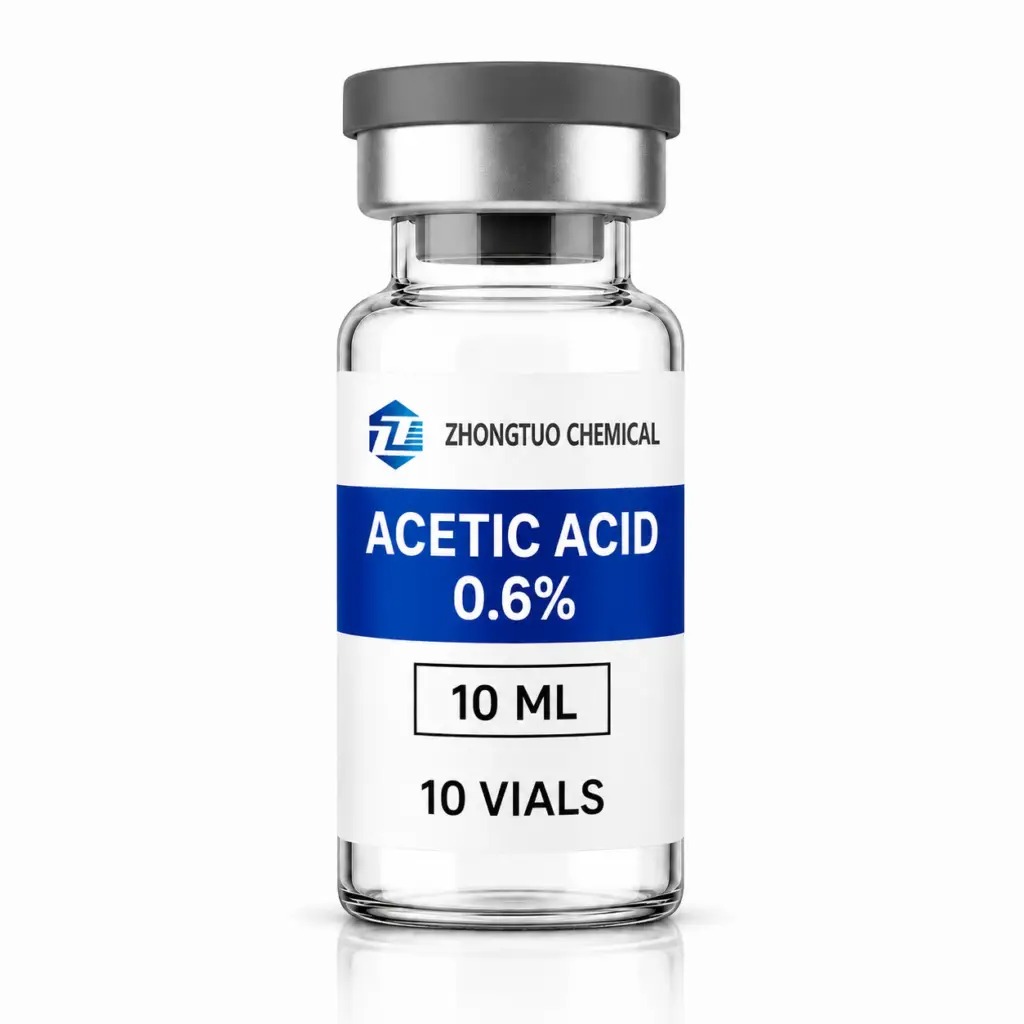
There is a category of lab supply that does not attract much attention in research publications but determines whether experiments run smoothly or not. Reconstitution solutions belong to that category, and acetic acid 0.6 is one of the most widely used among them. For labs working with peptide compounds, having a reliable supply of this support solution is just as important as having the primary compounds themselves.
The Role of Reconstitution Solutions in Peptide Research
Many peptides arrive in lyophilized, or freeze-dried, form. This format extends shelf life and simplifies storage, but it means the compound must be dissolved into a working solution before use. The solvent chosen for this process has real consequences. Using the wrong solution can degrade the compound, reduce its solubility, or introduce variables that compromise experimental results.
Why Acetic Acid Is Used
Acetic acid is commonly selected as a reconstitution agent because of its chemical compatibility with a wide range of peptide compounds. At the right concentration, it helps peptides dissolve cleanly and maintain stability in solution. The 0.6% concentration is a recognized standard in research settings, chosen because it falls within the range that supports effective peptide dissolution without introducing unnecessary chemical stress to the compound.
Consistency Between Batches Is Critical
If your reconstitution solution varies in concentration or purity between orders, you introduce a variable that sits outside your experimental design and cannot be easily controlled. Sourcing acetic acid 0.6 from a supplier with consistent quality standards and batch-level documentation removes this concern entirely. What you receive on your first order should be identical in preparation and quality to what you receive on your tenth.
Acetic Acid Peptides and the Broader Research Supply Picture
The phrase acetic acid peptides reflects the close relationship between this support solution and the peptide research workflow. You do not use acetic acid in isolation. You use it in service of specific peptide compounds, and the quality of that supporting solution directly affects the quality of the work you do with the primary compound. This is why sourcing both from the same verified research supplier makes so much practical sense.
Pack Size Options That Match Lab Scale
Researchers working at different scales need different formats. The 10ml per 10 vials option suits labs running larger or ongoing studies where reconstitution needs are frequent and consistent. The 3ml per 10 vials format works well for smaller operations or exploratory phases where compound usage is more limited. Having both options available from a single supplier allows labs to match their order to their actual needs rather than overbuying to compensate for format limitations.
When to Consider Bulk Ordering
For any lab that uses reconstitution solutions regularly, bulk ordering is a straightforward way to reduce per-unit costs and avoid the disruption of running low mid-experiment. The bulk pricing tiers for acetic acid 0.6 follow the same structure as other ZLZ Peptides catalog items, with reduced rates at the 30 to 60 box and 100-box levels. Planning your ordering schedule around these tiers during budget preparation is a simple way to stretch your research supply budget further.
Integrating Support Solutions Into Your Procurement Plan
- Identify which primary compounds in your study require acetic acid for reconstitution.
- Calculate your estimated volume needs for the full duration of the study.
- Review available pack size options and select the format that matches your usage rate.
- Evaluate bulk pricing tiers and order accordingly if your volume justifies it.
- Source from the same supplier as your primary compounds for documentation consistency.
This five-step approach turns what is often a last-minute procurement decision into a planned, organized part of your research preparation. Support solutions are too important to leave until the primary compound has already arrived and is waiting to be reconstituted.
Verified Quality at Every Stage
The catalog number AA10 designates the 10ml per 10 vials format of acetic acid 0.6 in the ZLZ Peptides research catalog. Like every other product in the catalog, it carries the research-only designation and is subject to the same quality and documentation standards applied to primary research compounds. This consistency across the catalog ensures that researchers do not have to apply different vetting standards to different product types.
Conclusion
Acetic acid 0.6 is a support solution that earns its place in every research lab working with peptide compounds. The right concentration, consistently prepared, from a verified research-only supplier, ensures that your reconstitution process supports rather than undermines your experimental outcomes. Pair your primary compounds with acetic acid peptides from the same trusted source and keep every stage of your research workflow on solid, verified ground.