
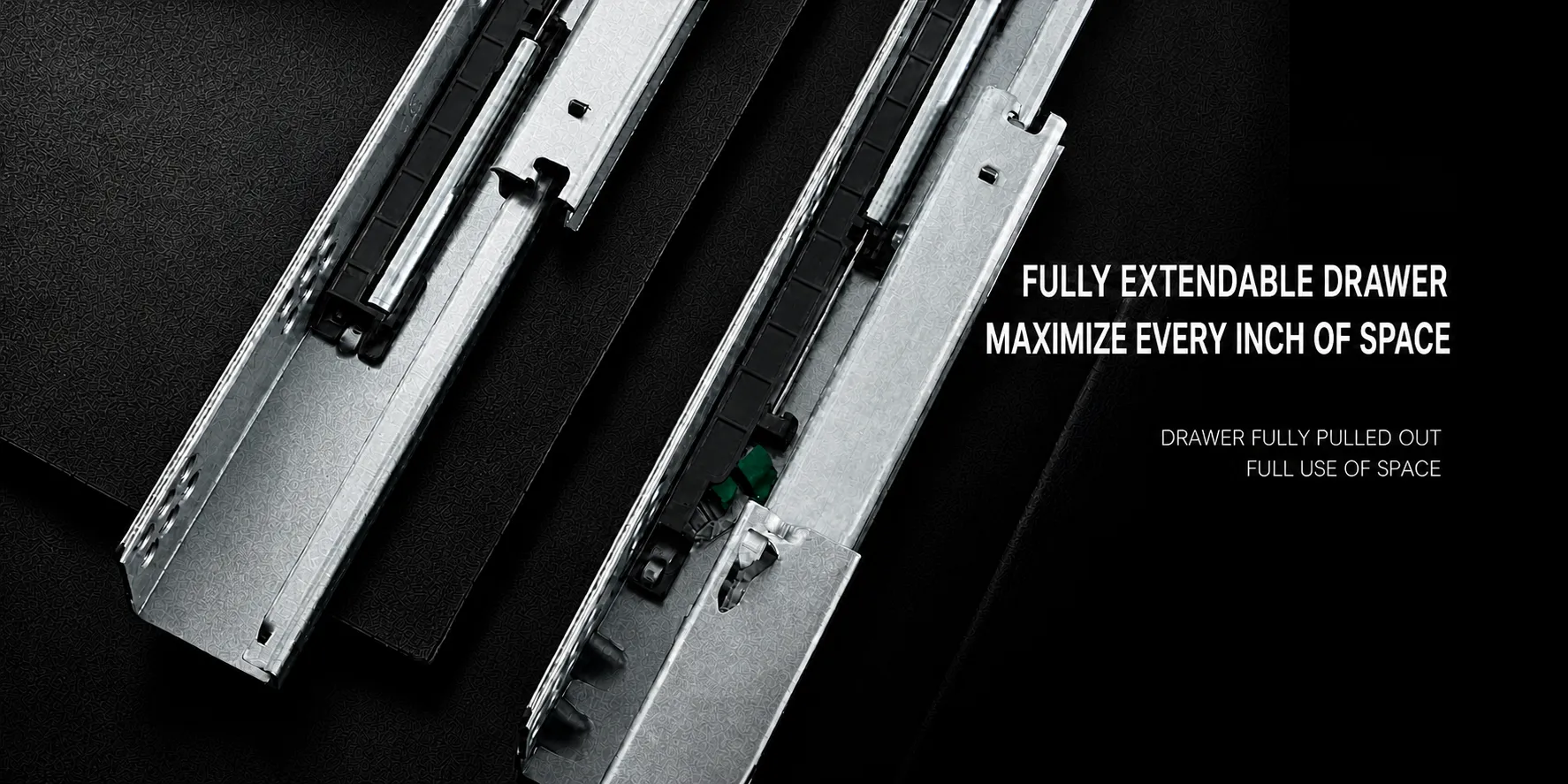
A pull-out basket looks like a simple accessory. It is a wire or panel basket that slides out of a cabinet so you can reach items at the back without kneeling or digging. In practice, the slide underneath it does most of the work, and a weak choice shows up quickly. Baskets carry bottles, pots, pantry goods, and cleaning supplies, and they get opened many times a day. If you build or sell cabinets, the slide you choose decides whether customers enjoy the feature or complain about it.
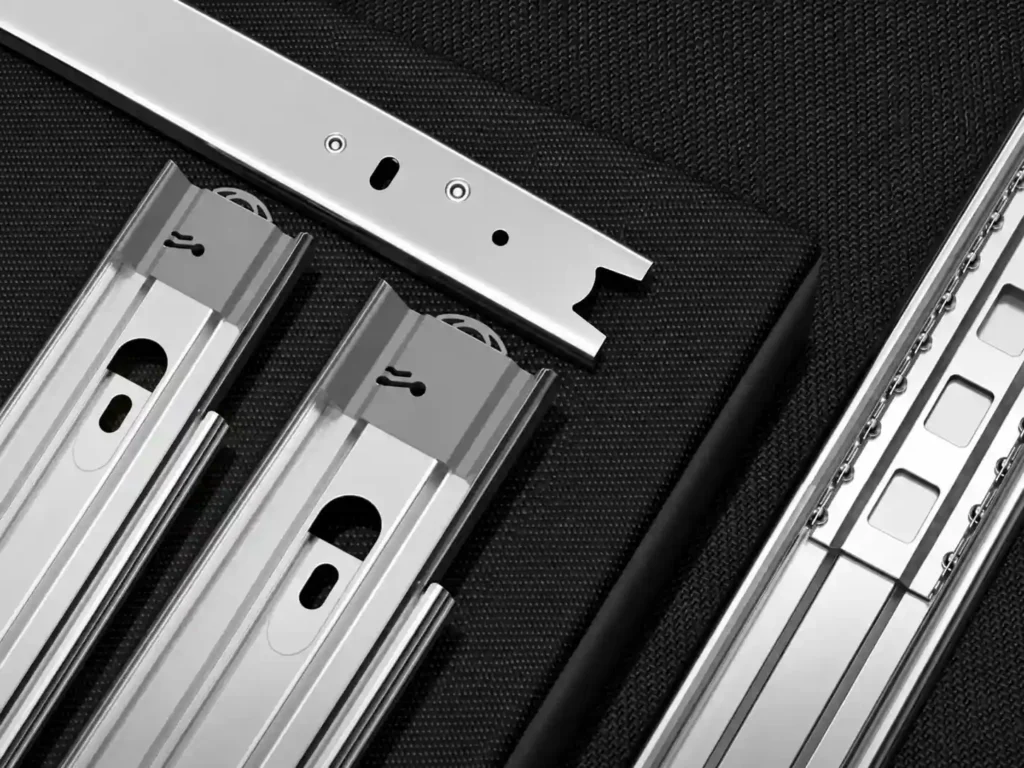
Why basket slides ask more than standard drawer slides
A drawer usually holds a moderate, fairly even load. A basket often holds heavier, uneven items, and people tend to load it fully because the space looks inviting. Cans, jars, and cookware add up fast.
Baskets are also deeper in use. When a basket pulls out, the weight moves forward and away from the cabinet, which puts leverage on the slide. A slide that feels fine when empty may feel very different once the basket is packed.
Finally, baskets get used hard. In a kitchen, a basket by the stove might open and close dozens of times in a day. Any roughness or looseness becomes obvious.
What to look for in a basket slide
When you compare options, a few practical points matter more than the headline numbers.
- Load behavior in real use. Test with realistic weight placed the way customers will place it, not evenly centered.
- Smooth motion along the full travel. Gritty or sticky spots feel worse on a basket than on a plain drawer.
- Stability when extended. The basket should not sag or tilt when pulled out.
- Consistency between pairs. Two slides that feel different will make the basket twist.
- Fit with your cabinet design. Check clearances, mounting points, and the space your basket needs.
Ask the supplier for clear technical information, and confirm anything that is unclear in writing.
Match the slide to the cabinet
Basket systems appear in many places: base cabinets, tall pantry units, corner cabinets, and under-sink spaces. Each has different space limits and different loads. A narrow base cabinet next to a stove has little room to spare. A tall pantry unit may carry far more weight and needs more attention to stability.
Before choosing a slide, list the cabinet types you build and the loads you expect. If your range includes several cabinet types, you may need more than one slide option. A supplier who can discuss these cases openly is more helpful than one who offers a single answer for everything.
Standard solutions or something custom
Many projects work well with standard slide solutions. They are proven, predictable, and quick to source. If your baskets and cabinets follow common sizes, a standard option may be all you need.
Custom work becomes relevant when your baskets or cabinets have unusual dimensions, when you want a particular feature, or when you are developing a product line with specific requirements. SOTAL describes its offering as running from standard drawer slide solutions to flexible OEM/ODM requirements, so both routes are available from the same kind of supplier. If you suspect you will need customization, raise it early, because it affects timing, quantities, and the information the supplier needs from you.
Test samples under realistic conditions
Samples tell you far more when you test them properly. Install them in a real basket and a real cabinet, then try the following:
- Load the basket with typical items, such as bottles and cans
- Open and close it repeatedly, slowly and quickly
- Watch for sagging, twisting, or noise
- Check how it feels with the basket half full and completely full
- Compare two samples side by side if you are evaluating suppliers
Write down what you observe. Specific notes make feedback easier to act on, and they help you compare fairly.
Keep the approved sample as a reference. When bulk shipments arrive, compare a few units against it.
Look closely at the supplier
Because baskets are used hard, consistency matters. A supplier who keeps quality steady from batch to batch protects you from surprises on the assembly line. Ask how they maintain consistency, how they handle changes, and how they plan production when orders grow.
SOTAL describes its approach as combining practical engineering, consistent quality, and responsive service to support long-term B2B partnerships, with clear communication and stable production planning. Whether a given supplier lives up to such a description is something you can test through sampling and a small first order. Pay attention to how quickly questions get answered and how clearly.
Working directly with a factory also shortens the path between your question and the people who build the product. If something does not fit, the engineers can look at it instead of passing messages through several layers.
Prepare your side of the project
Suppliers can only match what you describe. Before requesting quotes, gather:
- Cabinet interior dimensions and clearances
- Basket size and construction
- Typical loads you expect
- Estimated order quantities and whether you plan repeat orders
- Finish or appearance requirements
A clear specification gets faster, more accurate replies and makes quotes easier to compare. Send the same sheet to each supplier so the comparison is fair.
Start small, then scale
A trial order is the cheapest way to learn how a supplier performs. Use it to check product quality, communication, and delivery, and to catch problems before a larger run. If everything goes smoothly, expand with more confidence. If something goes wrong, you have found out at low cost.
Support your own customers
If you are a wholesaler, clear product information helps your customers choose correctly. Provide dimensions, installation notes, and basic guidance. Customers who pick the right slide the first time rarely return it, and they tend to come back for more.
Where to begin
If you are weighing pull-out basket slides in China, start with your specifications, request samples for real testing, and judge suppliers by how clearly they communicate and how they plan production.
The takeaway
Pull-out baskets look simple, but the slide beneath them takes the strain. Choose by real-world load behavior, test samples in your own cabinets, decide between standard and custom with care, and favor suppliers who communicate clearly and think long term. Get those pieces right and the feature becomes something customers praise instead of fix.