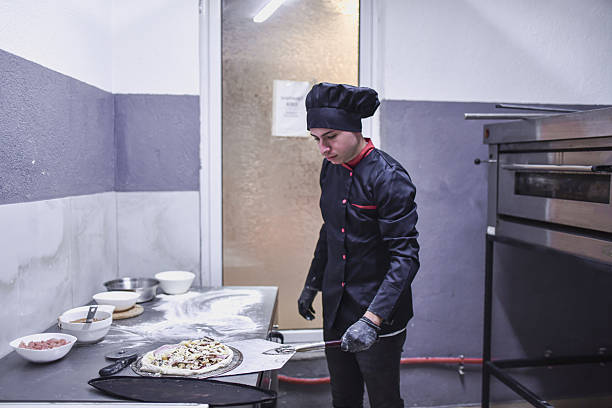
Quick Answer: Professional chef coats are purpose-built kitchen garments designed for heat resistance, hygiene, and long-shift durability. They differ from generic workwear in their double-breasted construction, thick cotton or poly-cotton blend fabric, and protective cuff design. Custom chef coats take this further by adding embroidery, brand colors, and tailored fits that reinforce a restaurant’s identity while keeping the team comfortable during service.
The Real Job a Chef Coat Does During Service
Most people assume a chef coat is about looking the part. It does that, sure. But it earns its keep well before service photos or Instagram reels come into play.
A well-made professional chef coat functions as a barrier. The thick fabric protects against splatter burns, hot steam, and accidental contact with hot pans. The double-breasted front panel, a design element that’s been standard in culinary workwear since the early 1800s, gives chefs a clean side to flip over if one gets stained mid-service. That’s not just aesthetics. It’s practical hygiene management in a fast-moving kitchen.
Here’s the thing most people miss: the fabric choice decides almost everything else. Cotton breathes well and handles high-heat environments without becoming unbearable, but it wrinkles and fades faster than blends. A poly-cotton blend, typically 65% polyester and 35% cotton, holds its shape through dozens of washes and dries faster between shifts. Neither is universally better. Your choice should depend on your kitchen’s heat profile and how often uniforms go through the laundry cycle.
Why Custom Chef Coats Are No Longer Just for Fine Dining
There’s an outdated idea that custom chef coats are a luxury reserved for Michelin-starred kitchens or chef-driven tasting menus. That’s simply not true anymore.
Restaurants of every size, from fast-casual spots to food trucks to ghost kitchen operations, now use custom kitchen uniforms to communicate brand identity before the food even hits the table. When your front-of-house team sees a brigade in coordinated, embroidered coats, it sets a tone. When guests spot your kitchen through an open-view pass, that visual consistency does quiet marketing work.
The practical case is just as strong. Custom sizing means your team actually wears their coats properly, sleeves at the right length and shoulder seams where they should be, rather than bunching up extra fabric or restricting movement because of a poor off-the-rack fit. That matters in a kitchen where mobility and safety are linked.
Custom embroidery, typically stitched at the chest or cuff, is also more durable than printed logos. It survives commercial washing in a way that heat-transfer prints simply don’t.
What Separates a Good Chef Coat from a Forgettable One
Not all professional chef coats are built the same. A few things separate coats that hold up over years of service from ones that start fraying after a few months.
Fabric and Yarns. The quality and composition of the yarns used in a chef coat determine the durability, breathability, comfort, and overall performance, which is why premium yarns are what separate a truly exceptional chef coat from one that is easily forgotten.
Stitching density matters more than most buyers check. Stress points like the sleeve join, the button placket, and the underarm take the most wear during active service. Double-stitched or reinforced seams at these points signal better construction overall.
Buttons should be removable or covered. Fabric-covered buttons are a food safety consideration, not just a stylistic one. They prevent bacterial buildup in button grooves and make cleaning more effective.
Sleeve length and taper. A coat with tapered sleeves fits cleanly under an apron without bunching, which reduces the risk of catching fabric near an open flame or a burner.
Food safety standards in commercial kitchens, governed by bodies like the FDA Food Code in the US and equivalent standards in other markets, emphasize clean, intact uniforms as part of hygiene compliance. A coat that’s falling apart isn’t just unprofessional; it can become a liability during a health inspection.
How to Choose the Right Fit for Your Team
Sizing for a kitchen team is more involved than ordering by shirt size. A line cook working a grill station has different needs than a pastry chef doing precision work at a bench.
For high-heat stations, prioritize fabric weight and coverage. For pastry and prep roles, a lighter coat with better mobility may serve the team better. Some kitchens use different coat weights by station, which is a smart approach to comfort without sacrificing a uniform look.
When ordering custom chef coats for a team, getting accurate measurements and allowing a small buffer for layering, especially in colder prep environments, prevents the common problem of coats that fit perfectly in summer but feel restrictive when staff wears a base layer in winter.
Frequently Asked Questions
Q: What makes professional chef coats different from regular workwear? A: Professional chef coats are engineered specifically for kitchen environments. They feature double-breasted fronts for stain management, heavy-duty fabric for burn protection, and design details like knotted buttons and reinforced seams that standard workwear simply doesn’t include.
Q: Are custom chef coats worth the extra cost for small restaurants? A: For most restaurants, yes. The per-unit cost of customization decreases with order volume, and the return on brand cohesion and team morale tends to outweigh the upfront difference. Custom sizing also reduces replacement frequency, since properly fitting coats experience less seam stress.
Q: What fabric is best for chef coats in hot kitchens? A: A poly-cotton blend (65/35) balances breathability with durability and is the most common choice for high-volume kitchens. Pure cotton is cooler but wears and fades faster. Lightweight fabrics with moisture-wicking properties are increasingly available for particularly hot kitchen environments.