
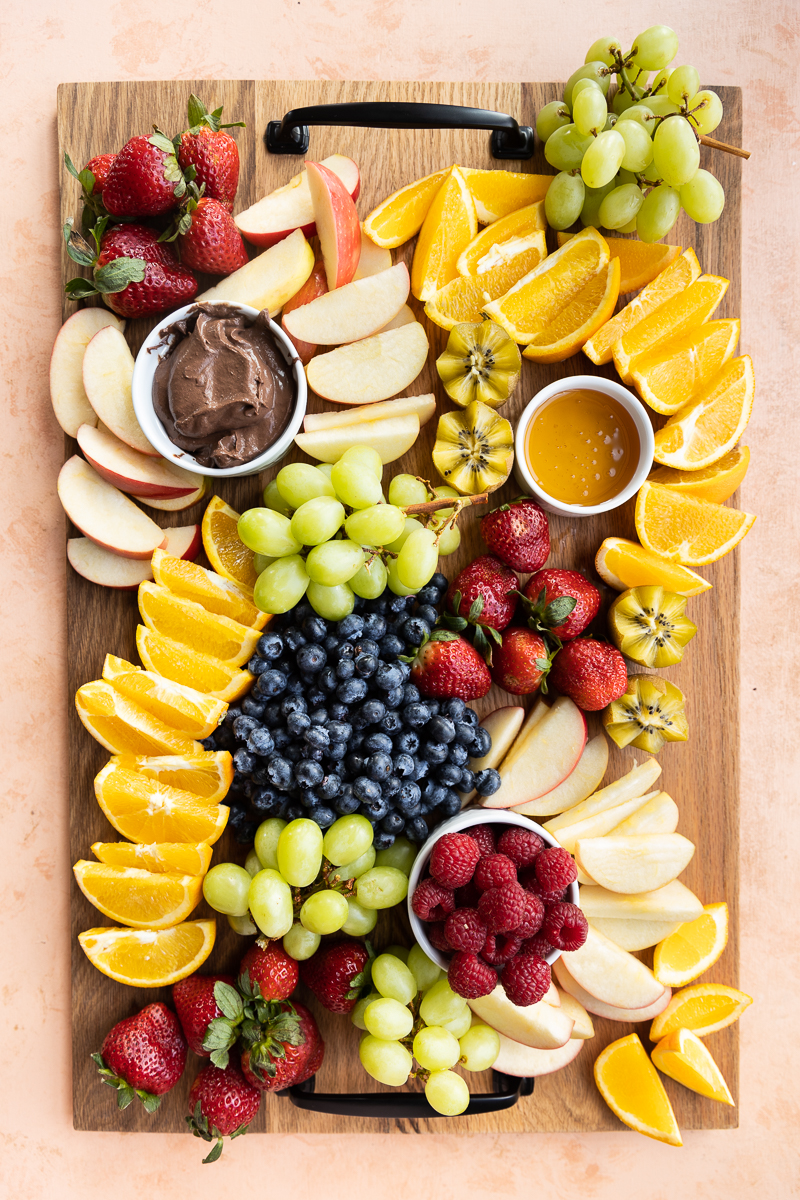
Quick Answer: A fruit charcuterie board is an arrangement of fresh, dried, and preserved fruits displayed alongside complementary accompaniments like cheeses, dips, chocolates, and nuts on a shared board or platter. The best fruit boards balance color contrast, texture variety, and flavor range from tart to sweet to rich. They work as a dessert centerpiece, brunch showpiece, or refreshing counterpoint to a classic meat and cheese spread.
There is a particular kind of silence that falls over a table when a beautifully arranged board is set down. Conversations pause. Phones come out. Everyone leans in slightly before anyone reaches for a piece. That moment is not accidental. It is what thoughtful, intentional food presentation produces, and it is entirely possible to create at home or order for any occasion.
The fruit charcuterie board has moved from a niche entertaining trend to a legitimate centerpiece category with its own conventions, pairings, and aesthetic logic. This guide covers what actually goes on one, how to arrange it so it looks as good as the ones you see on social media, and which flavor combinations make the board as memorable to eat as it is to look at.
Start here, and you will not end up with a pile of grapes and strawberries on a cutting board.
What Is a Fruit Charcuterie Board? Clearing Up the Terminology
Traditional charcuterie refers specifically to cured and preserved meats, a French culinary tradition with roots in 15th century butchery. The word migrated into popular food culture as a descriptor for any intentionally arranged communal board, not just meat-focused ones. A fruit charcuterie board borrows the format and philosophy of classic charcuterie presentation but centers fresh, dried, and preserved fruits as the primary components.
The defining characteristics of the format are: abundance without clutter, variety without randomness, and visual rhythm achieved through deliberate color placement. A fruit board is not a fruit salad served on wood. It is a composed arrangement where every item has a placement reason and every color cluster is intentional.
That distinction matters practically. It is the reason a well-built fruit board looks completely different from a fruit platter from a grocery store deli counter, even when the ingredients overlap.
The Core Components of a Great Fruit Charcuterie Board
Fresh Fruits: The Foundation
Fresh fruit provides the visual color anchors and the primary eating experience. The goal is variety across three dimensions: color, texture, and size.
Berries are essential for filling small gaps, providing intense color punctuation, and offering tartness that balances sweet or rich accompaniments. Strawberries, raspberries, blueberries, and blackberries are the most versatile. Use at least three berry varieties on any board above small size.
Grapes are the structural workhorses of fruit boards. They cluster naturally, photograph beautifully, and provide a neutral-sweet flavor that bridges bolder fruits. Red, green, and black varieties together create color variety with a single ingredient category.
Sliced stone fruits including peaches, nectarines, plums, and cherries add elegance and seasonal character. Thinly sliced peaches fanned across one section of a board transform its look immediately. Stone fruits are best in summer and early fall when quality is at its peak.
Melon cut into cubes or scooped into balls adds pale green and orange tones that contrast against berry reds and purples. Honeydew and cantaloupe both work well. Watermelon works but releases water quickly; use it on boards that will be consumed within an hour of arrangement.
Citrus used in segments rather than slices adds a jewel-like visual quality and bright acidic flavor. Blood orange segments are particularly striking. Clementine sections work well for texture contrast.
Dried Fruits: Color Depth and Sweetness Concentration
Dried fruits do something fresh fruits cannot: they hold their shape and color for hours without releasing liquid, making them ideal for boards that need to look good across an extended event. Dried apricots, Medjool dates, dried cranberries, golden raisins, and dried mango all work well. Medjool dates in particular add a luxurious richness that bridges the fruit board into dessert territory.
Arrange dried fruits in small clusters between fresh fruit sections to fill visual gaps and add textural contrast. Their concentrated sweetness makes them natural pairing points for soft cheeses and nut butters.
Accompaniments: What Turns a Fruit Plate into a Board
The accompaniments are what make a fruit charcuterie board worth eating slowly rather than just snacking from.
Soft cheeses like brie, camembert, or whipped ricotta pair naturally with almost every fruit category. The fat and salt in soft cheese amplifies fruit sweetness in a way that makes both taste better. Place the cheese as a visual anchor at the center or corner of the board.
Chocolate in bark, truffle, or dipping sauce form bridges the fruit board into dessert function. Dark chocolate with sea salt alongside fresh strawberries or raspberries is one of the stronger simple flavor combinations in entertaining.
Honey and fruit dips including Greek yogurt dip, mascarpone with vanilla, and fruit-forward spreads give guests something to do with the board beyond eating items individually. A small jar of local honey placed beside a wedge of brie and a cluster of grapes produces a spontaneous pairing that guests discover and share.
Nuts add crunch and a savory note that prevents the board from reading as one-dimensional sweetness. Marcona almonds, candied pecans, and pistachios are the most visually appealing and most versatile options.
How to Arrange a Fruit Board So It Actually Looks Like the Photos
This is where most home attempts fall short. The arrangement technique is what separates a beautiful board from an adequate one.
Start with anchors, not edges. Place your largest items first: cheese wedge, large dip bowl, largest fruit clusters. These are your visual anchors and everything else fills around them. Starting from the edges produces a board that looks too organized and rigid.
Work in color clusters, not rows. Group berries together, then place grapes adjacent, then position a contrasting color (orange melon or yellow mango) nearby. Avoid alternating colors in a row pattern; it looks intentional in a way that reads as forced. Clusters with intentional overlap look natural.
Fill every gap. The difference between a board that looks full and one that looks sparse is gap-filling. Blueberries, raspberries, small nuts, and chocolate chips are excellent gap-fillers. No board base should be visible in the final arrangement.
Use odd numbers and varying heights. Three strawberries fanned in one direction look better than four in a row. A small stack of chocolate squares creates height variation. A sprig of fresh mint or rosemary adds a vertical element and color contrast that reads as garnish rather than filler.
Work in layers on larger boards. On a board serving more than six people, place some fruits partially underneath others rather than side by side. The overlapping creates depth that photographs extremely well and looks abundant rather than merely large.
Fruit Board Sizing and Planning for Events
How much fruit a board needs is one of the most common planning questions, and the answer depends on whether the board is a main event or a supplement.
As a standalone dessert board for 6 to 8 people: Budget roughly 4 to 5 ounces of fresh fruit per person plus accompaniments. A 12 by 18 inch board accommodates this comfortably.
As a party addition alongside other food: 2 to 3 ounces of fresh fruit per person. On a buffet table with other options, guests will sample rather than rely on the board for satiety.
As a gift board for 2 to 4 people: A smaller 10 by 12 inch board with a tight, abundant arrangement is more impressive than a large board with sparse coverage. Gifted boards benefit from more dried fruits and chocolates than event boards since they travel and hold better.
For events in the Phoenix Metro and Chandler area where heat is a factor, outdoor boards need attention to timing. Fresh berries in direct Arizona sun in summer start to weep within 30 minutes. Set boards out no more than 20 to 30 minutes before guests arrive, and keep them in shade when possible.
Fruit Charcuterie Board Flavor Pairing Guide
The most memorable boards are built around a few specific pairing moments, not just a collection of individually good items.
Strawberry and brie: Classic. The berry’s acidity cuts the fat of the cheese perfectly. Add a drizzle of balsamic glaze for a more sophisticated version.
Raspberry and dark chocolate: The intensity of both ingredients matches, and the tartness of the raspberry cleanses the richness of the chocolate between bites.
Medjool date and goat cheese: The caramel-like sweetness of the date against the tangy brightness of fresh goat cheese is one of the more underused combinations in fruit board planning.
Grapes and aged manchego: If the board crosses into classic charcuterie territory, this pairing belongs on it. Manchego’s nuttiness amplifies grape sweetness in a way that most softer cheeses do not.
Peach and prosciutto: For a fruit board that bridges sweet and savory, thinly draped prosciutto over peach slices adds a salty, silky contrast that most guests find unexpectedly delicious.
Frequently Asked Questions
Q: What is a fruit charcuterie board?
A fruit charcuterie board is a composed arrangement of fresh, dried, and preserved fruits presented with complementary accompaniments like cheeses, dips, chocolates, and nuts on a shared board. It borrows the visual philosophy of classic charcuterie presentation but centers fruit as the primary component.
Q: How far in advance can I build a fruit charcuterie board?
Most fruit boards can be assembled up to two hours in advance and kept covered in a refrigerator. Berries and sliced stone fruits are the most time-sensitive, starting to release liquid after about two hours. Dried fruits, nuts, chocolates, and hard cheeses hold well for several hours. Assemble in stages: place stable items first, add fresh berries and soft cheeses close to serving time.
Q: What size board do I need for 10 people?
A 16 by 24 inch board or comparable surface accommodates a fruit board for 10 people when the board is the primary food offering. If it is one of several food stations at an event, a 14 by 18 inch board is typically sufficient. Surface area matters more than specific dimensions; generous coverage without gaps is the visual goal.
Q: Can I order a fruit charcuterie board for delivery?
Yes. Specialty charcuterie services in the Phoenix Metro and Chandler area offer fruit board delivery for events, celebrations, and gifting. Ordering from a professional ensures consistent arrangement quality, proper ingredient sourcing, and boards built to hold up during transport. Confirm delivery area and availability when ordering.
Q: What fruits do not work well on charcuterie boards?
Very juicy fruits cut into large pieces, like ripe watermelon in hot weather or overripe peaches, can release liquid that soaks the board and affects adjacent items. Bananas oxidize and turn brown quickly after slicing and are not appropriate for boards that need to hold their appearance. Fruits that require deep refrigeration and cannot sit at room temperature briefly are also poor choices for extended-display boards.