
Drive around Madison in late July and you’ll see two kinds of lawns. One is thick, deep green, and barely fazed by the heat. The other is patchy, going a little brown at the edges, maybe fighting a crabgrass problem that started back in May and nobody caught in time. The difference almost never comes down to luck or a better sprinkler. It comes down to a lawn maintenance services program that’s actually built around this specific climate instead of a generic, one-size-fits-all schedule.
This is a look at what real lawn care services madison wi include for homes in the Madison area, why timing matters more here than people expect, and how to tell whether the schedule someone’s proposing is actually going to work.
Why Lawn Care in Madison Isn’t the Same as Lawn Care Anywhere Else
Cool-Season Grass Runs on Its Own Clock
Most lawns in this part of Wisconsin are cool-season grasses Kentucky bluegrass, perennial ryegrass, fine fescue, sometimes a blend of all three. These grasses do almost all of their real growing in spring and fall, when soil temperatures sit in a comfortable range. Summer, for a cool-season lawn, isn’t a growth period. It’s closer to survival mode. A lawn that’s pushed hard with fertilizer in July isn’t rewarding you with more growth, it’s usually just getting stressed, and stressed grass is exactly what disease and weeds are waiting for.
The Soil Doesn’t Cooperate on Its Own
A lot of Madison-area yards sit on dense clay subsoil that compacts easily, especially in newer developments where topsoil got scraped thin during construction. Compacted soil doesn’t let water, air, or fertilizer reach the root zone the way they need to, no matter how good the product is. This is why aeration isn’t an optional upsell on a lot of properties around here, it’s the single thing standing between a mediocre lawn and a genuinely healthy one.
A Compressed Growing Season Means Timing Is Everything
The active growing window for cool-season turf in this region runs roughly from late April through early October. Miss the right week for a pre-emergent application, or fertilize a month too late in the fall, and you don’t just get a slightly worse result you often lose that opportunity completely until the next season rolls around.
What a Real Lawn Maintenance Program Looks Like
Mowing: The Most Underrated Part of Lawn Care
Height and Frequency Matter More Than People Think
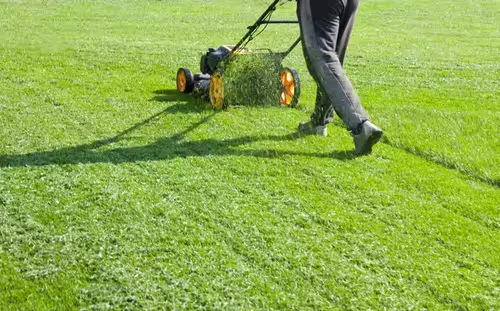
Cutting a lawn too short is one of the fastest ways to weaken it, especially heading into summer. A taller cut generally in the 3 to 3.5 inch range through spring and fall, and a bit taller through summer heat shades the soil, holds moisture better, and crowds out weed seedlings that need sunlight to establish. Frequency matters just as much as height: cutting too infrequently and removing more than about a third of the blade length in one pass stresses the grass and can trigger the kind of yellowing homeowners often mistake for disease.
Sharp Blades, Every Time
It sounds minor, but a dull mower blade tears grass instead of cutting it cleanly, and torn grass tips turn brown and become an easy entry point for fungal disease. Any lawn care company worth hiring keeps blades sharp on a schedule, not “whenever we notice.”
Fertilization: Timed to When the Grass Actually Wants It
A proper fertilization program for cool-season turf in this region typically runs on a spring-and-fall rhythm, with careful, lighter applications through summer rather than a flat schedule that treats every month the same. Early applications, timed to when soil temperatures are consistently warming in spring, support root development without forcing excessive blade growth the lawn can’t sustain. The fall application matters even more when the grass is quietly building root reserves for winter, and a well-timed feeding here does more for next spring’s lawn than anything applied during the growing season itself.
Why a Soil Test Beats Guessing
Fertilizer poured on without knowing what the soil actually needs is, at best, a waste of money, and at worst counterproductive over-applying phosphorus, for instance, doesn’t help the lawn and can run off into local waterways. A soil test through a university extension lab is cheap, and it takes the guesswork out of exactly what a given yard is missing.
Weed Control: Getting Ahead of the Problem, Not Chasing It
Pre-Emergent Timing Is a Narrow Window
Crabgrass and other problem weeds germinate from seed once soil temperatures hit a fairly specific range in spring. A pre-emergent herbicide applied before that window closes stops the problem before it starts; applied even a week or two late, it’s mostly just an expense with little to show for it. This is one of the clearest examples of why “we’ll get to it eventually” doesn’t work in lawn care where the calendar doesn’t wait.
Broadleaf Control Through the Season
Dandelions, clover, and other broadleaf weeds respond better to treatment at certain growth stages than others, and a good maintenance plan adjusts its approach as the season moves along rather than applying the same product every visit regardless of what’s actually growing.
Aeration and Overseeding: The Reset Button
Fall Is the Preferred Window, But Not the Only One
Fall aeration lines up with cooler temperatures and the grass’s natural fall growth push, which gives newly loosened soil and any overseeding a strong window to establish roots before winter. That said, lawns showing heavy compaction standing water after rain is a good tell can benefit from a spring aeration too, especially after a rough winter.
Overseeding Fills In What Mowing and Fertilizer Can’t Fix
Thin or bare patches usually aren’t a fertilizer problem, they’re a seed problem. Overseeding right after aeration gives grass seed direct soil contact instead of sitting on top of thatch, which is the difference between seed that actually germinates and seed that just washes away or gets eaten by birds.
Grub and Pest Prevention
June is the key window for preventative grub treatment in this region, since Japanese beetles and June bugs lay eggs in lawn soil in early summer. By the time grub damage actually shows up usually as soft, spongy patches of dying turf in late summer or fall the larvae have already been feeding on roots for weeks, which is why prevention timed to early summer works far better than trying to treat visible damage after the fact.
Seasonal Cleanups
Spring Cleanup
Winter leaves behind matted leaves, dead growth, and sometimes snow mold a grayish, matted patch that shows up where snow sat deep and long. A proper spring cleanup clears debris so sunlight and air can reach the crown of the grass again and the lawn can actually start recovering.
Fall Cleanup
Leaves left sitting on a lawn through a Wisconsin autumn block light and trap moisture against the grass, which is a near-perfect setup for fungal problems by spring. A thorough fall cleanup, paired with that critical fall fertilization, is what sets a lawn up to green up fast the following April instead of limping into the season.
What to Look for in a Madison-Area Lawn Care Company
A Schedule Built Around This Climate, Not a National Template
Ask a potential provider when they fertilize, aerate, and apply pre-emergent, and see if the answers match this region’s actual growing calendar. A company running the same generic five-visit program regardless of location isn’t necessarily doing anything wrong but it’s worth asking whether that schedule was actually built with Dane County soil and weather in mind.
Willingness to Talk About Your Specific Lawn
Every yard is a little different sun exposure, soil compaction, grass type, drainage. A provider who wants to look at the actual property before quoting a program, rather than selling the same package to everyone on the street, is usually the one who ends up delivering better results.
Clear Communication Between Visits
Lawn care problems are easier to fix early. A company that flags an issue with early signs of grub damage, a drainage problem, a disease starting to spread during a routine visit instead of waiting for you to notice it yourself is worth more than the lowest quote on the table.
Final Thoughts
A great-looking lawn in Madison isn’t the result of one big effort in spring it’s the sum of a lot of smaller decisions made at the right time throughout the year: mowing height, fertilizer timing, catching weeds before they establish, aerating before compaction takes hold, and cleaning up before winter and after it. Homeowners who understand that rhythm are in a much better position to judge whether a lawn care company’s program is actually built for this region or just recycled from somewhere with an entirely different growing season.
If you’re comparing lawn care services in the Madison, Oregon, Stoughton, DeForest, or McFarland area, it’s worth asking any provider how their schedule lines up with the specifics laid out here; the answer tells you a lot about whether they know this climate or are just guessing.